Blog / Bank Earnings Week, October 13 to 14, 2026: Dates, Times, and the Three Numbers That Will Decide the Reaction
Bank Earnings Week, October 13 to 14, 2026: Dates, Times, and the Three Numbers That Will Decide the Reaction

Third-quarter earnings season opens Tuesday, October 13, 2026, when JPMorgan Chase, Wells Fargo, Citigroup and Goldman Sachs all report before the bell, followed by Bank of America and Morgan Stanley on Wednesday. It is the first set of bank results since the Federal Reserve raised rates in September, and the banks walk in as laggards: the financials ETF is down about 4% since the hike while the S&P 500 is up more than 3%.
This guide covers the dates and times, what the banks reported last quarter so you can judge the next one, the three numbers that will decide the reaction, and what the financials sector has done in the two weeks after each of the last thirteen bank kickoffs. We ran that last calculation ourselves.
Bank earnings dates and times, October 2026
- Tuesday, October 13 (before the open): JPMorgan Chase (release about 7:00 AM ET, call 8:30 AM), Wells Fargo (release about 7:00 AM ET, call 10:00 AM), Citigroup, Goldman Sachs, BlackRock.
- Wednesday, October 14 (before the open): Bank of America, Morgan Stanley.
- Thursday, October 15: U.S. Bancorp and Charles Schwab, per one calendar; confirm on the companies' investor pages.
Dates are from the banks' own notices and the interactive investor earnings calendar updated October 2. Big banks almost never move these dates, but the times can shift by a few minutes. The full season schedule, including the mega-cap tech weeks later in the month, is in our Q3 2026 earnings season guide.
What the banks reported last quarter
The second quarter was the best the big banks have ever printed, which is the bar this week has to clear. Combined profit at the five largest banks rose 39% from a year earlier, as Quartz reported on July 14. Goldman Sachs had the best quarter in its history: $20.34 billion of net revenue, up 39%, and $20.98 of earnings per share, helped by investment banking fees that included the SpaceX offering. JPMorgan's profit rose 41%. Bank of America earned $9.1 billion, up 27%, on revenue of $31.6 billion. Citigroup earned $5.8 billion, up 45%. Wells Fargo earned $6.4 billion, or $2.00 a share, up 17%.
Nearly all of that growth came from the trading desks and the deal pipeline, not from lending. That matters now, because the trading windfall of a volatile spring is hard to repeat, and the Fed has since changed the lending math.
What Wall Street expects this time
Consensus compiled by Money Morning on September 25 puts JPMorgan near $5.82 to $5.84 a share on about $50.6 billion of revenue, Wells Fargo near $1.85, Goldman Sachs near $16 to $16.40, and Bank of America near $1.17 to $1.18. Bank of America has already told investors to expect investment banking fees of $1.6 to $1.8 billion, down from about $2 billion a year earlier, with trading roughly flat against last year's $5.3 billion. Wells Fargo still guides full-year net interest income near $50 billion.
For the whole S&P 500, FactSet's estimate heading into the season is 29.1% earnings growth for the third quarter, which would be the third straight quarter above 25% (via interactive investor). Banks report first, so they set the tone for whether that number looks safe.
The three numbers that will decide the reaction
- 1. Net interest income and what the banks say about the hike. The Fed raised rates to 3.75% to 4.00% on September 16, the first increase since 2023, and the ten-year Treasury yield is above 5%. Higher rates lift what banks earn on loans and securities, but they also raise what banks pay on deposits and slow loan demand. Watch each bank's full-year net interest income guidance against what it said in July. A raise is the bull case for the sector; a trim, with a mention of deposit costs, is the bear case. Our guide to sectors in a rising-rate world explains why banks do not automatically win when rates go up.
- 2. Credit costs. Provisions for loan losses and card charge-offs are where a weakening consumer shows up first. September's jobs report added only 29,000 jobs with unemployment at 4.2%. If the banks raise reserves and talk about stress at the lower end of their card books, the market will read it as a read on the economy, not just on the bank.
- 3. Investment banking and trading against a record. Goldman and Morgan Stanley live or die this week on fees and trading. Both are being compared with a record quarter. Flat is the realistic good outcome; the question is whether the deal pipeline commentary points up or down into year end.
How bank stocks have moved around earnings week: our own numbers
We looked at the Financial Select Sector ETF (XLF) around each big-bank earnings kickoff whose date we could confirm, thirteen of them from January 2023 through July 2026, using daily closing prices from Yahoo Finance.
- On kickoff day itself, XLF was higher 9 of 13 times, with a median move of only +0.3%. The day the banks report is rarely the big move.
- Ten trading days after the kickoff, XLF was higher 12 of 13 times, with a median gain of 2.1%. The exception was October 2023, when the sector fell 5.1% as yields spiked.
- The S&P 500 over the same ten days was higher 9 of 13 times, median +0.9%. The sector has tended to do better than the market in the two weeks after it reports.
Thirteen observations is a small sample, and the one loss came in a month that looks a lot like this one: a hawkish Fed and a ten-year yield breaking out. So treat the pattern as context, not a signal. The honest reading is that the sector has usually recovered its pre-earnings nerves once the numbers were out, and that the one time it did not, rates were the reason.
Where the sector stands going in
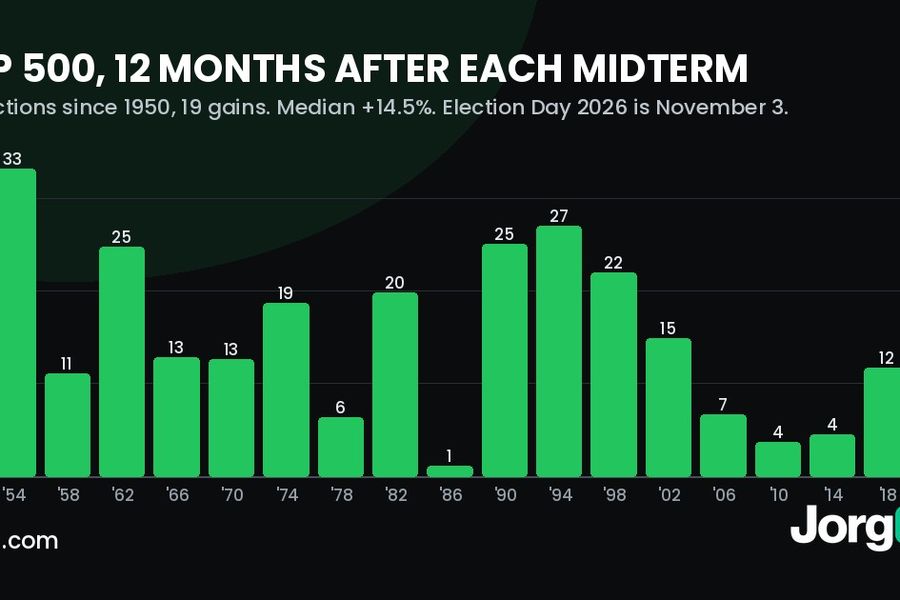
XLF is down about 2% for 2026 and down about 4% since the September 16 hike, while the S&P 500 closed at a record on October 6. That gap is unusual going into a quarter the banks are expected to grow earnings in, and it means expectations are lower than the headline consensus suggests. It also means the reaction will depend less on the earnings per share and more on the guidance. Add the Fed meeting on October 27 and 28 and the midterm election on November 3, and the banks are reporting into the most crowded three weeks of the quarter. The October market calendar has every date.
How a rules-based trader handles bank earnings week
Earnings weeks reward having decided things in advance. Four rules that follow from the data above, and from our general earnings season playbook:
- Do not hold a full-size position into the print. Kickoff-day moves have been small on average but the range is wide. If you want exposure to a bank through its report, size the position so that a 5% gap against you is tolerable.
- Let the first hour go. Bank reports land at 7:00 AM and the calls run through the open, so the first hour trades on headlines and then on management's tone. Our own data on the first hour of trading shows it is where stops get hit by noise.
- Put the stop in before the report, not after. A stop that already exists acts on price. One you plan to place after you see the number acts on your reaction to the number.
- Trade the guidance, not the beat. Every bank on this list beat estimates last quarter and the sector still trailed the market into this one. The move after the report has followed what the banks said about net interest income and credit, which is why those are the numbers to read first.
If you would rather have those rules enforced automatically, with a stop on every position and no new entries in the first hour, that is what JorgAI does inside the brokerage account you already have. You can set up your rules before Tuesday and leave them alone during the week.
Quick answers
When do banks report Q3 2026 earnings? JPMorgan, Wells Fargo, Citigroup and Goldman Sachs report Tuesday, October 13, 2026 before the market opens. Bank of America and Morgan Stanley report Wednesday, October 14.
What time does JPMorgan report earnings? About 7:00 AM Eastern on October 13, with the conference call at 8:30 AM. Wells Fargo releases at about 7:00 AM with its call at 10:00 AM.
Why are bank stocks down before earnings? The financials ETF has fallen about 4% since the Fed's September rate hike while the S&P 500 rose. Higher rates raise deposit costs and slow lending, and the market is waiting to hear how much that offsets higher loan yields.
What should I watch in bank earnings? Full-year net interest income guidance, loan-loss provisions and card charge-offs, and investment banking and trading revenue against last quarter's record.
Do bank stocks usually go up after earnings? In the thirteen kickoffs we measured since 2023, the financials ETF was higher ten trading days later twelve times, with a median gain of 2.1%. The one exception, October 2023, came with a spike in Treasury yields.
We will update this article with the actual results on the evening of October 13 and again after Bank of America and Morgan Stanley report on October 14.
This article is education, not investment advice. Past patterns do not predict future results, and thirteen observations is a small sample.
Keep reading

Let the AI do the trading.
Set it up in minutes. 7 day free trial on Starter and Pro.
Get started free